Be sure your employees get proper training on how to react in the event of a kitchen fire
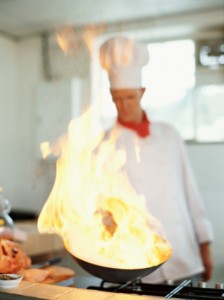 If you own or operate a commercial kitchen, you have an obligation to maintain safe working conditions for your employees in compliance with OSHA standards. Fire is a serious risk in any commercial kitchen setting, and you need to be sure that you are doing everything possible to protect your employees and your property from the potentially devastating effects of a kitchen grease fire. Here are the main points to cover in your kitchen fire prevention plan.
Fire Extinguishers
OSHA standards require that a fire extinguisher be present and easily accessible in every commercial kitchen. These extinguishers must be Class K, as this type of extinguisher is effective against grease fires.
Automatic Fire Suppression Systems
Commercial kitchens are also required to install and maintain an automatic fire suppression system. This system must have the ability to be triggered manually as well as automatically when temperatures inside the exhaust hood indicate the presence of fire. In addition, NFPA and California Fire Code requires that the automatic fire suppression systems installed in commercial kitchens be UL300 Certified.
Grease Traps and Filters
Because grease traps and filters can become reservoirs of fuel for potential fires, naturally it is very important to clean or change them out regularly. Flue Steam offers a convenient grease filter exchange service to help commercial kitchen owners ensure that they always have clean filters installed in their system.
Kitchen Exhaust System Cleaning
In the course of normal kitchen operations, vaporized grease is going to build up on the inside of kitchen exhaust hoods and ductwork. This accumulated grease must be removed regularly to ensure it does not build up to dangerous levels. Exhaust hoods will need to be cleaned more frequently, but this can be done with relatively inexpensive hand scraping. The insides of the ductwork will only need cleaning a few times per year. This can be accomplished using steam cleaning techniques that reach to every corner and crevice of the system.
Exit Routes
Exits must be clearly signed, and exit routes should be kept clear of obstacles and adequately lit to ensure that employees and customers can quickly and easily find their way out of the building in the event of a fire.
Employee Training
Employee training is also vital, because without proper training employees will not know how to utilize the fire safety equipment and other protections provided for them. Make sure that employees know how to operate hand-held fire extinguishers as well as the automatic fire suppression system, but also communicate to them that fighting major fires should be left to the fire department. All they have to do in the event of a serious fire is sound the alarm, activate the automatic fire suppression system, and exit the building.
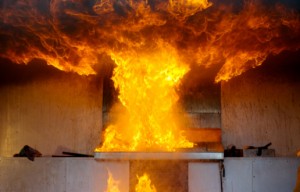 According to the latest available data from the National Fire Incident Reporting System, cooking is the leading cause of all nonresidential building fires, as well as the leading cause of restaurant fires specifically. Commercial kitchen fires cause over $172 million in property damage and injure roughly 75 people per year. Fortunately, 91 percent of kitchen fires are small, confined fires that do not cause extensive damage to the restaurant building. In large part this is because most restaurant owners work very hard to reduce their risk of fire and to ensure that any fires that do start in the kitchen get extinguished promptly. Here are 3 things that the kitchen air control and fire suppression specialists from Flue Steam can do to help you reduce the risk of fire in your commercial kitchen.
 At its most basic, a kitchen ventilation system works by drawing hot, greasy air out of the kitchen and replacing it with fresh air. Without diving into the technical specs, here are some of the main points of kitchen ventilation that you may need to keep in mind in order to ensure the safety and comfort of your kitchen environment.
 Kitchen ventilation is all about balance. Hot, greasy air leaving the kitchen through the exhaust hood must be replaced by an equal volume of cool, fresh air in order to keep your system working properly. If your swamp cooler is undersized or oversized, you may find yourself facing significant problems with your exhaust system that can potentially lead to serious fire hazards. Here is some information to help you make sure your swamp cooler is delivering the necessary level of performance to keep your kitchen safe and comfortable.