



What to Do in the First 60 Seconds of a Commercial Kitchen Fire
September 12, 2026
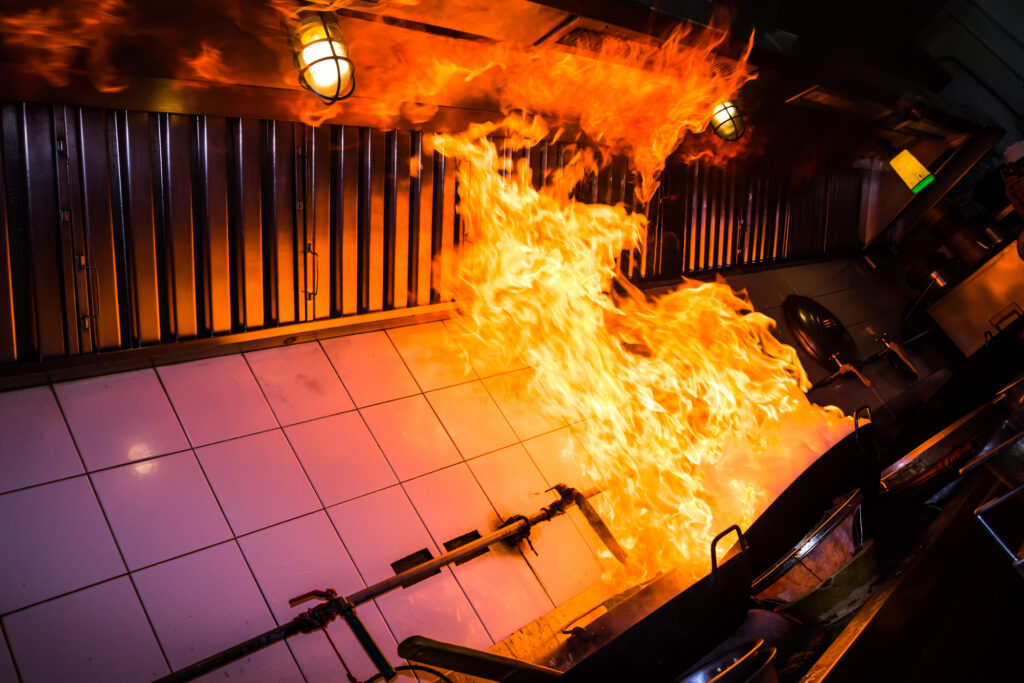
In the first 60 seconds of a commercial kitchen fire, your team should activate the fire suppression system, shut off fuel sources, call 911, and get everyone out safely. Fires grow fast, and the actions taken in that first minute often decide whether the damage stays small or becomes a total loss. At Flue Steam, we have spent more than 40 years helping Southern California kitchens prepare for the unexpected, and the kitchens that respond best are the ones that have practiced.
What Should Happen in the First 10 Seconds?
Speed matters more than anything else at the start. The first steps are:
- Shout a clear warning so every employee knows there is a fire.
- Stop cooking and turn off heat sources if it is safe to reach them.
- Do not move a burning pan or pot. Carrying it can spread the fire and cause serious burns.
Your team should never hesitate at this stage. A clear, loud alert is the signal that starts everything else.
How Do You Activate the Fire Suppression System?
Most commercial kitchens have an automatic fire suppression system that activates when the temperature under the hood reaches a preset level, often around 450 degrees. It also has a manual pull station, which is typically located near an exit. If the fire is visible and the system has not activated, pull the station right away. The system releases an extinguishing agent over your appliances and triggers an automatic shut-off valve for your gas supply. Every employee should know where the pull station is and how to use it.
When Should You Call 911?
Call 911 as soon as a fire starts, even if you believe the suppression system has put it out. Fires in ductwork can continue to burn out of sight and spread to other parts of the building. Let the fire department confirm that the fire is fully out. Designate one person in advance to make the call and meet the responders at the entrance.
Should You Use a Portable Fire Extinguisher?
Only if the fire is small, you have a clear path to an exit, and you have been trained to use the extinguisher. Never use water on a grease fire, because it can cause the fire to flare and spread. Kitchens should keep the proper extinguisher types within easy reach, and licensed service keeps them in working order. If the fire is growing, do not try to fight it. Leave immediately.
How Do You Evacuate Safely?
Once the suppression system is activated and 911 has been called, focus on getting everyone out:
- Direct customers and employees to the nearest safe exit.
- Keep exit routes clear of boxes, equipment, and trash.
- Close doors behind you if it is safe to do so, which helps slow the spread of smoke and flames.
- Gather at a set meeting point outside so you can account for everyone.
How Can You Prepare Before a Fire Ever Starts?
Good preparation makes the first 60 seconds far more effective. Consider these steps:
- Post an emergency plan in the kitchen with the location of the pull station, extinguishers, and exits.
- Run short fire drills with every shift, including new hires.
- Keep your exhaust system clean, since grease buildup is a leading cause of duct fires.
- Schedule automatic fire suppression inspections every six months, as required by code.
- Keep portable extinguishers serviced by licensed technicians.
Be Ready Before Every Shift
You cannot control when a fire might start, but you can control how ready your team is to respond. To schedule cleaning, suppression system service, or extinguisher inspections, call 800-700-FLUE or request a free quote from Flue Steam today.





Copyright © 2026 Flue Steam Inc. All Rights Reserved. | Service Locations
Website by 
