Blog

Top 5 Benefits of Kitchen Exhaust Duct Cleaning from Flue Steam

December 20, 2014

Learn about the many benefits of trusting Flue Steam with your kitchen exhaust duct cleaning.

Top 5 Benefits of Kitchen Exhaust Duct Cleaning from Flue SteamEvery commercial kitchen needs periodic exhaust duct cleaning service. You may have many options for contractors to provide this service, but here at Flue Steam we believe we can provide superior service. Here are the top 5 benefits of working with us to keep your exhaust ducts clean using a combination of hand scraping and steam cleaning techniques.

We Keep Your Business Open

First and foremost, the most important benefit of kitchen exhaust duct cleaning is it enables your business to stay open. Without routine cleanings, your kitchen would quickly become in violation of local fire and safety codes. Getting your kitchen exhaust duct cleaning from Flue Steam is a particularly smart choice because we provide convenient proof-of-service stickers that make record-keeping easy.

We Help Reduce the Risk of Fire

The reason commercial kitchens are required to get exhaust duct cleaning is that it helps reduce the risk of a fire in the ventilation system. Without cleaning, grease vapor produced during cooking would build up inside the exhaust hood and ductwork. This greasy buildup could then ignite if heated to a high temperature and easily spread through the ductwork to every corner of the building. By simply removing this grease, you eliminate a potential fire’s fuel source and help keep it from spreading. At Flue Steam, we can provide extremely thorough grease removal using steam cleaning equipment.

We Help Promote Cleaner Indoor Air

Dirty exhaust systems can actually begin to interfere with proper airflow over time. This results in issues with smoke, odors, and heat in the kitchen as the system is no longer able to facilitate adequate ventilation. Eventually this dirty air may begin to make its way to other parts of the building where it may affect the comfort of diners as well as your cooking staff. Fortunately, by getting an exhaust system cleaning from Flue Steam you can promote good ventilation and clean air. Our technicians can clean and service your swamp cooler as well as your exhaust system to ensure a good balance between incoming and outgoing air.

We Clean When It’s Convenient For You

One particular advantage of working with Flue Steam is that our services are available at the times that suit your business needs. We offer emergency service 24/7, and we can also offer early morning or late night cleaning so that you can get service without having to alter your kitchen’s hours of operation.

We Offer Grease Filter Exchange Service

If all the above benefits haven’t convinced you to get service from Flue Steam, remember that we offer grease filter exchange service too. This service is the most convenient way to ensure your grease filters stay in good condition. High-quality grease filters can help make your exhaust duct cleanings last longer by capturing more grease before it can enter the ductwork, so kitchen exhaust cleaning with grease filter exchange from Flue Steam can really deliver a great value.

Do’s and Don’ts for Putting Out a Grease Fire

November 27, 2014

Make sure your staff knows what to do in case of a grease fire in the commercial kitchen.

Do’s and Don’ts for Putting Out a Grease FireWhen cooking oil or grease from animal fat gets too hot, it will catch on fire. For vegetable oils, this will happen around 450°F, while lard and other animal fats will combust around 375°F. In a commercial kitchen, a fire on the cooktop is actually the least of your worries. The situation will be much more dangerous if the fire begins in or manages to spread to the interior of your exhaust hood or ductwork, as it can easily travel to other parts of the building from there.

Grease fire prevention is absolutely essential in a commercial kitchen, and indeed local Fire Codes demand that commercial kitchen operators comply with specific safety guidelines in this area including proper cleaning and maintenance for their exhaust duct systems. However, despite having all relevant safety measures in place you will also want to make sure your kitchen staff knows these do’s and don’ts for putting out a grease fire.

Do…

…Turn Off the Unit: In the event of a grease fire on the cooktop, the first thing to do is immediately turn off the heat so that any new splashes of grease or oil will not be heated to combustion point.

…Cover the Pot: If the fire is occurring within a pot or skillet, covering the pot can help smother the flames.

…Use Baking Soda: If grease has splattered outside the pot or the pot cannot be smothered, pouring baking soda over the flames will also put out the fire. This is a good alternative for minor cooktop flareups as baking soda will not damage the cooktop or contaminate the kitchen with chemicals.

…Grab a Portable Fire Extinguisher: In case of a large fire or one that is in or on the exhaust hood, a portable fire extinguisher may be used. Commercial kitchens must have portable fire extinguishers on hand, and the best kind to have is a Class K extinguisher that will release a mist instead of a spray to help extinguish the fire without risk of splashing burning grease to other surfaces.

…Activate the Automatic Fire Suppression System: In the event of a large grease fire, the automatic fire suppression system should activate and release a mist of chemicals to extinguish the fire. However, if for some reason the system does not kick on, employees should activate it manually.

Don’t

…Use Water: Water will not put out a grease fire effectively. Instead, it can either splash the burning grease around or vaporize on contact and carry grease particles to other locations, either of which scenarios can lead to another fire.

…Move Burning Materials: Moving the pot or item that is on fire is another way to accidentally make matters worse, as grease could splatter and cause injury or additional fires.

…Endanger Yourself: If the fire cannot be controlled immediately, or if the warning alarm for the automatic fire suppression system goes off, everyone should leave the kitchen immediately for their own safety.

Does Your Commercial Kitchen Have Enough Makeup Air?

November 24, 2014

Avoid comfort and efficiency issues with swamp cooler service from Flue Steam.

Does Your Commercial Kitchen Have Enough Makeup Air?In any building, it is essential to maintain a balance in the air flowing in and out of different rooms in order to avoid creating negative pressure that interferes with comfort and energy efficiency. In most applications, balance can be achieved simply by installing air vents and return registers in every room. However, in the case of a commercial kitchen, this method does not work, because air that becomes hot and greasy from proximity to cooking surfaces cannot be safely or comfortably recirculated in the building. Instead, this air must be sucked into the kitchen exhaust system and vented from the building. For fresh, cool, new air, commercial kitchens must rely on makeup air handlers, typically in the form of a swamp cooler.

Key Signs of a Makeup Air Problem

If you’re not sure if your commercial kitchen is getting sufficient makeup air, check for the following scenarios:

Slamming Doors: When negative pressure is created within the building, this vacuum effect can actually cause doors to slam.

Hot Dining Area: Another effect of negative pressure is more outside air getting drawn into the building, making it more difficult to keep spaces cool.

Sweaty AC System: When the AC system begins working overtime to cool a hot space, this can result in humidity problems, increased condensation on the ducts, and potential water damage to ceilings.

New Cooking Equipment Added: When your kitchen was first designed, the plans should have ensured a proper balance of air leaving and entering the kitchen. However, if you have added new cooking equipment since then the balance may have changed. One easy way to check is to add up the exhaust flow rates for all your exhaust hoods and compare that total to the output of your swamp cooler or other makeup air equipment. If the exhaust rate is higher than the output, you need more makeup air.

Solving Makeup Air Problems

As a first step to solving makeup air problems, your best bet is to check that your current system is actually producing the amount of cooled air it is supposed to. At Flue Steam, we offer expert swamp cooler service to help detect and correct air flow problems. Often, a small repair can restore your swamp cooler’s output to solve the air imbalance issue. However, in some cases you may need a replacement unit, a supplemental unit, or a larger unit to achieve proper air exchange. You can rely on us to tell you what you need honestly.

Why Buy Your Grease Filters From Flue Steam

October 31, 2014

Buy your grease filters from your kitchen air control specialist for superior protection.

Grease FiltersAt Flue Steam, we offer a complete range of kitchen air control and fire suppression services to help protect your commercial kitchen from the risk of a fire. Selling quality grease filters is an important part of this effort. Here are some of the benefits of buying your grease filters from us.

Experience

By installing the right type of grease filter and keeping it in good condition, you can capture up to 80 percent of the grease that would otherwise make its way into your air ducts, without compromising the efficiency of your kitchen air control equipment. Naturally you want to select the best filters, but you may not be an expert in this area or have time to learn all the details yourself. Fortunately, at Flue Steam we have over 40 years of experience and we know grease filters. We can help you select the right filters that meet your needs for cleanliness, efficiency, and cost.

Quality

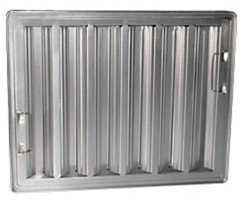
When you shop with Flue Steam, you never waste your time considering inferior products. Instead, you choose from grease filters made by the two top-quality brands we carry, Kason and Flame Gard. We carry most sizes and models, including options made from stainless steel, galvanized steel, and aluminum. Stainless steel provides maximum protection against rust and corrosion in heavy-duty commercial applications, but if your operation does not produce that much grease galvanized steel may also provide sufficient protection. Aluminum is the lightest material and offers easy handling. No matter which material you choose we typically recommend a baffle construction instead of mesh to increase both air flow and grease extraction.

Convenience

Perhaps the most compelling reason to buy your grease filters from us is that we offer a very convenient grease filter exchange service. We’ll work with you to set up a schedule for changing out your grease filters at preset intervals so you can always have clean, efficient filters in your kitchen. In most cases, this means you will get a visit from a skilled professional every two weeks, to haul off your dirty filters for cleaning and replace them with new ones.

Price

Don’t forget, we buy our filters in bulk direct from the manufacturer so we get a better price. We pass these savings on to you with discounts off the regular price for a single filter.

Understanding Portable Fire Extinguishers

October 28, 2014

Learn what type of portable fire extinguisher is best for a commercial kitchen.

Fire ExtinguishersIf you own or operate a commercial kitchen, fire regulations dictate that in addition to an automatic fire suppression system, you must also have portable fire extinguishers. This helps ensure that employees will be able to quickly extinguish a fire that may begin in an area not protected by the automatic fire suppression system. Here’s what you need to know about portable fire extinguishers before you choose products to protect your kitchen.

Fire Classes

Before you start looking at fire extinguishers, it is important to consider what types of fires may occur in your kitchen. Fires are divided into the following classes depending on what types of materials are being burned:

  • Class A: Organic materials like wood, cloth, paper, and many plastics.
  • Class B: Flammable liquids like solvents, lacquers, petroleum greases, tars, etc.
  • Class C: Energized electrical equipment.
  • Class K: Flammable cooking media including oils and fats.

Two Common Types of Portable Fire Extinguishers

Different types of portable fire extinguishers use different extinguishing agents depending on the type of fire they are designed to fight. For example:

  • ABC Fire Extinguishers are a good multi-purpose fire extinguisher for home and office needs. They use a chemical agent called mono ammonium phosphate to extinguish Class A, B, and C fires. This chemical is corrosive and needs to be cleaned up quickly after use.
  • Class K Fire Extinguishers are specifically designed to fight grease fires in commercial kitchens. They spray a mist of potassium acetate and potassium citrate into the fire rather than a stream to prevent oil from splashing and causing the fire to spread. As the chemical settles onto the cooking appliances it will also help prevent the fire from reigniting.

UL Ratings

Underwriters Laboratory (UL) tests portable fire extinguishers and provides ratings that describe the product’s effectiveness. The first number in the rating always describes how the extinguisher measures up against 1.25 gallons of water in putting out a fire. For example, a product rated 2A:K would be twice as effective as 1.25 gallons of water (or as effective as 2.5 gallons) on a Class K fire. On ABC extinguishers you will also find a second number that shows the square footage it can handle. For example, a 4A:80B:C extinguisher would contain the equivalent to 5 gallons of water and cover 80 square feet.

Rechargeable vs Non-Rechargeable

Most types of portable fire extinguishers come in rechargeable and non-rechargeable versions. At Flue Steam, we highly recommend rechargeable extinguishers for commercial kitchens. This type of portable fire extinguisher costs more upfront, but because it can be refilled after each use rather than discarded it delivers a better value over time.