



Why Your Commercial Kitchen’s Swamp Cooler Is More Important Than You Think
April 21, 2026
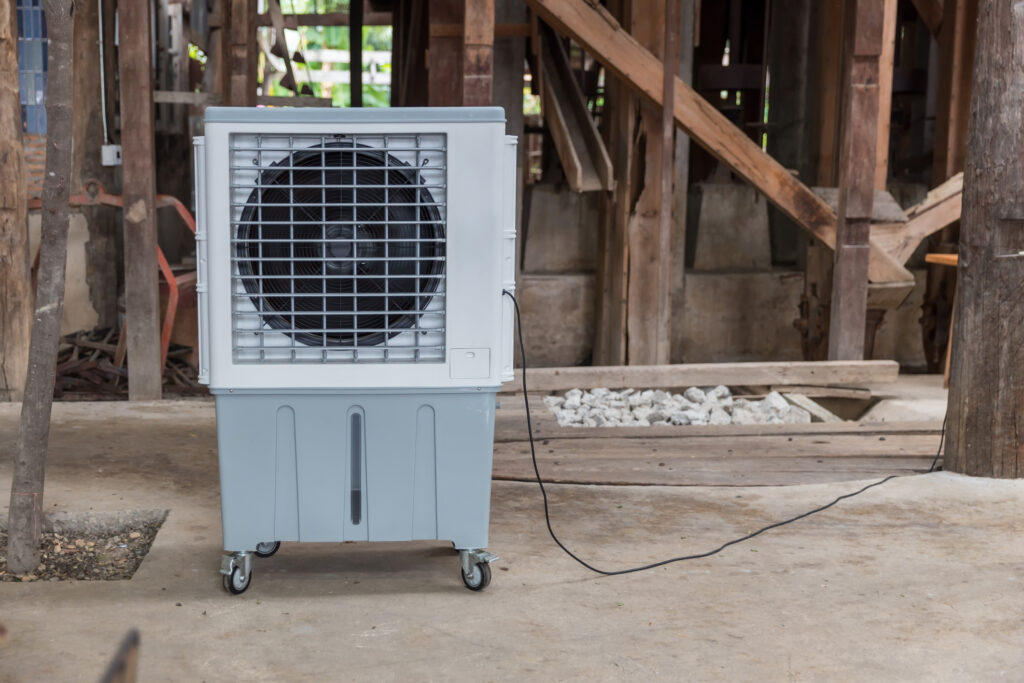
When restaurant owners and kitchen managers think about fire prevention and ventilation, they tend to focus on the obvious: the exhaust hood, the ducts, the grease filters. And while all of those are critical, there’s one component of your kitchen ventilation system that doesn’t get nearly enough attention — the swamp cooler.
At Flue Steam, we’ve been servicing commercial kitchens across Southern California for more than 40 years. In that time, we’ve seen firsthand how a neglected swamp cooler can quietly undermine the performance of an otherwise well-maintained kitchen. Here’s what every commercial kitchen operator should know.
What Does a Swamp Cooler Actually Do?
Your kitchen exhaust system works by pulling hot, greasy air out of the kitchen and venting it outside. But for that process to work properly, the air that leaves has to be replaced by air coming in. That’s the job of the swamp cooler, also known as a makeup air unit.
When the volume of incoming cool air doesn’t match the volume of hot air being expelled, your kitchen develops a negative pressure environment — essentially a vacuum effect. This imbalance leads to a chain of problems that affect everything from employee comfort to fire safety.
What Happens When Makeup Air Is Inadequate?
A kitchen operating with insufficient makeup air will experience several noticeable — and not so noticeable — problems:
- Rising temperatures. Without a steady supply of cool replacement air, heat builds up quickly. This creates an uncomfortable and potentially dangerous environment for kitchen staff.
- Reduced exhaust efficiency. When the exhaust system can’t draw air properly, grease-laden vapors linger longer in the kitchen and build up faster in ducts, increasing fire risk.
- Slamming doors. The vacuum effect can cause exterior doors to slam shut on their own — a minor nuisance that’s actually a symptom of a larger ventilation issue.
- Smoky conditions. Poor airflow can lead to smoke and cooking fumes staying in the kitchen rather than being safely expelled through the exhaust system.
None of these outcomes are acceptable in a professional kitchen, and all of them can be avoided with proper swamp cooler maintenance.
How Often Should Your Swamp Cooler Be Serviced?
Industry standards recommend having your swamp cooler professionally serviced at least every six months. During a service visit from Flue Steam, a licensed technician will inspect all of the unit’s vital components, including the float valve, pump, belts, and pads. You’ll be notified of any parts that need replacement, and the unit will be drained, cleaned, and resealed.
For maximum convenience, we recommend scheduling your swamp cooler service at the same time as your kitchen exhaust system cleaning. This way, you’re addressing both sides of your ventilation equation — how greasy air leaves and how clean air enters — in a single, efficient visit.
Sales and Installation, Too
If your kitchen doesn’t currently have a swamp cooler, or if your existing unit is beyond repair, Flue Steam also offers swamp cooler sales and installation. Our team can help you select the right unit for your kitchen’s size and cooking volume, ensuring your ventilation system is balanced from day one.
Don’t Overlook Half of Your Ventilation System
A well-functioning kitchen exhaust system is only as effective as the makeup air system supporting it. If your swamp cooler isn’t keeping up, your entire ventilation setup is working at a disadvantage — and so is your kitchen staff.
Let Flue Steam help you keep both sides of your kitchen ventilation system in top shape. Give us a call at 800-700-FLUE to schedule your next service visit or to learn more about our complete kitchen air control services.







Copyright © 2026 Flue Steam Inc. All Rights Reserved. | Service Locations
Website by 
