Blog

Choosing an Automatic Fire Suppression System

September 24, 2014

An overview of product offerings from industry leaders Ansul and Pyro-Chem
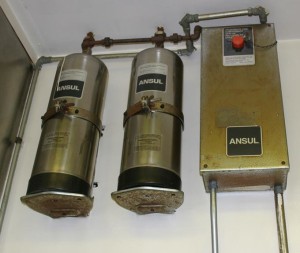
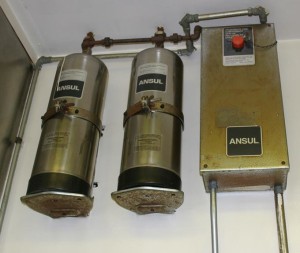
ChoosingIn order to comply with relevant fire and safety codes, every commercial kitchen must be equipped with an automatic fire suppression system that meets UL 300 standards. This equipment is extremely important for protecting your customers, your employees, and your property. A new automatic fire suppression system is a big investment, but considering that the average restaurant grease fire causes losses in excess of $25,000, the protection offered by a superior system will be well worth the expense.

Automatic fire suppression systems work by detecting the high temperatures that indicate a fire in your cooking equipment or your exhaust hood. Once the temperature sensor is triggered, the system automatically releases a wet extinguishing agent to smother the fire and avert disaster. The extinguishing agent should also help rapidly cool the equipment to prevent reflash from causing a second fire. When choosing an automatic fire suppression system, you will likely be looking at offerings from the two major players in this industry, Ansul and Pyro-Chem. Both of these manufacturers offer UL 300 listed equipment.

Pyro-Chem Automatic Fire Suppression Systems

Pyro-Chem products are coming out of a business culture that believes strongly in providing highly tailored fire suppression solutions for a number of diverse applications. For restaurant owners, Pyro-Chem offers the Kitchen Knight II system. The chief selling point of this product is its appliance-specific coverage. Each cooking appliance gets its own nozzle with a spray pattern designed specifically for the type of appliance being protected, whether that be a fryer, range, char broiler, etc.

Ansul Automatic Fire Suppression Systems

Ansul has been creating highly effective automatic fire suppression systems since 1962, and today their product line features two options, the R-102 system and the Piranha. Both systems offer the choice between appliance-specific or overlapping nozzle configurations. The overlapping configuration is designed to create a “fire-free zone” across an entire bank of cooking appliances. The main difference between the two Ansul systems is the type of extinguishing agent used. The R-102 uses Ansulex, a nearly neutral-pH chemical that is effective against fire while being gentle on your cooking equipment. The Piranha is a hybrid system that uses an extinguishing agent (PRX Liquid Fire Suppressant) plus water to suppress fires. UL testing has shown that the Piranha can cool cooking equipment up to 15 times faster than a standard system, covering hazard areas better while using less chemicals. The end result is more cost-effective protection.

Don’t Forget Portable Fire Extinguishers

For maximum safety, all automatic fire suppression systems should be paired with a portable fire extinguisher. Ansul and Pyro-Chem both offer excellent portable extinguishers for restaurants, as does Kidde. If you’d like help selecting, installing, or maintaining fire suppression equipment for your commercial kitchen, please give Flue Steam a call.
Body Found in Restaurant after Fryer Fire

August 5, 2014

Disastrous commercial kitchen fire claims life of local man.

Body BoundOn the morning of Thursday, July 31, firefighters clearing debris from the scene of Sharon’s Restaurant and Lounge in Blairsville PA made a sobering discovery: the body of 68-year-old Paul Eugene.

According to witnesses, Eugene was believed to be in the bar of the restaurant at the time of the fire, which started at around 10:30 on Wednesday night. As the fire spread, neighbors tried to look for Eugene, but were prevented from finding him by the collapse of the bar’s ceiling. The morning’s discovery was a sad confirmation of what locals already suspected namely that Eugene had perished in the fire.

Officials have not yet determined Eugene’s cause of death or the cause of the fire. However, restaurant owner Joe Koreini Jr said that the fire started in a fryer in the kitchen of the bar and pizza restaurant he and his wife owned and operated. They attempted to put out the fire by using fire extinguishers and then by dumping flour over the fire, but were unsuccessful.

The first quickly spread, engulfing the restaurant and bar and spreading to nearby buildings. The ice cream shop next door, along with the shop owner’s home behind it and an apartment above it were also destroyed. In total five families lost their homes before firefighters were able to get the blaze under control. Efforts to locate and extinguish the last smoking embers were still going on over 12 hours after the fire.

This story serves as a tragic reminder of the deadly potential that a kitchen fire can have. In this case, one can’t help but wonder if a working automatic fire suppression system couldn’t have prevented the loss of life and the loss of property.

Automatic fire suppression systems are designed to automatically detect excessive temperatures in a kitchen exhaust hood. When the temperature rises above 450 degrees or so, the system will assume there is a fire and discharge an extinguishing agent to take care of the problem. If necessary, the system can also be triggered manually. The end result is that the flames are not allowed to spread up into the exhaust hood and from thence into the ductwork. It is very important to keep flames out of these areas as any greasy residue there can add fuel to the fire and result in a serious hazard.

If you need help maintaining your automatic fire suppression system, don’t hesitate to call Flue Steam. We’ll help you protect your property, your guests, and your employees with expert fire prevention and suppression services.

5 Things You Need to Know About Your Kitchen Exhaust System

August 1, 2014

Knowing these 5 things can help prevent fire and liability issues on your property.

Kitchen Exhaust SystemThe exhaust system is an important part of any commercial kitchen. Far from just a simple venting system, it is actually a vital safety feature. As the owner of a commercial kitchen, you must understand the workings of this system as well as how to maintain it in order to protect your business from the risk of a grease fire. Here are 5 of the most important things you need to know about your kitchen exhaust system.
Owner’s Responsibilities

Under the regulations set up by the National Fire Protection Association (NFPA), the owner of the commercial kitchen bears ultimate responsibility for the condition of the exhaust system as well as the necessary fire suppression equipment. You must arrange for inspections, maintenance, and cleanings or else risk being held liable for the damage from any fires that may occur in the kitchen. If you have a property management company handling these tasks for you, you must transfer your responsibilities to them in writing or else risk being held liable for their actions.

Exhaust System Cleaning Schedule

The NFPA has set out some guidelines for when kitchen exhaust systems must be cleaned. Depending on the type and volume of cooking that occurs in your kitchen, you may need to get cleanings every month, every quarter, or once or twice per year. At Flue Steam, we recommend monthly kitchen exhaust hood scraping supplemented by annual or semi annual exhaust system steam cleaning.

Cleaning Standards

Ideally, you would get your exhaust ducts cleaned down to the bare metal. If you can’t visually tell if a given exhaust hood or duct section is clean, you can ask an IKECA-certified professional to use a special comb to measure the depth of the grease on the metal and confirm whether or not it meets the standard.

Access Door Requirements

NFPA recommendations specify that an access door should be made in the exhaust duct every 12 feet of a horizontal run, every floor of a vertical run, and at every bend in the ductwork. Having these access doors makes it easier to access and thoroughly clean every inch of the exhaust system. If your ductwork does not have sufficient access, Flue Steam can help by installing new access points that meet code requirements.

Required Documentation

The Fire Marshall is typically the authority in charge of verifying that you have met your obligations as to the cleaning and maintenance of your exhaust system as required by the local fire code. You will need to get certification stickers and inspection reports from the company providing your kitchen exhaust system cleaning as proof that you have complied with your duties.


What Flue Steams’ IKECA Membership Means for Our Clients

July 21, 2014

IKECA membership signals compliance with the gold standard of kitchen exhaust cleaning practices.

IKECAThere are quite a lot of companies out there offering kitchen exhaust cleaning services. Unfortunately, not all of them are very reputable. They may not do a very good job, either unintentionally or deliberately, and because it is difficult to see every nook and cranny of your exhaust system, you may not realize that a shoddy cleaning has left your property at risk of a fire.

One excellent way to know you are working with a reputable company that provides quality services is to check for IKECA membership. IKECA stands for the International Kitchen Exhaust Cleaning Association. Membership in this trade organization signals that the company you’re about to hire is serious about their work. Flue Steam is proud to be an IKECA member because it enables our clients to rest assured as to the following key points.

Our Employees are Certified

As an IKECA member, Flue Steam employs individuals who have successfully completed IKECA courses related to kitchen exhaust cleaning and fire safety. This means that clients can rest assured our employees are fully trained and up to date on various tools and techniques involved in their work, as well as on local code requirements affecting kitchen exhaust systems.

We Follow Industry Best Practices

When you work with an IKECA company, you know that you are getting honest and accurate information about the best practices in kitchen exhaust system cleaning. In other words, you don’t have to wonder if you’re getting cleanings too seldom or too frequently, or if you’re having enough grease removed at each cleaning. We will provide all of this information to you based on our understanding of industry best practices as identified by IKECA.

We’re Dedicated to Ongoing Training

Many trade organizations award certifications for life. This is not true of IKECA. IKECA certifications must be kept up through the earning of continuing education credits, which can be acquired through attendance at various industry seminars and events. Because achieving and maintaining IKECA membership requires serious effort, it signals to our clients that we are dedicated to getting the latest training and education that will enable us to serve them better.

We Can Measure Our Work

One very helpful tool that IKECA puts out is a comb that can be used to measure the depth of grease buildups on exhaust hoods and duct walls. Using this comb, we can prove to you that our cleaning services have made a significant difference in the cleanliness of your exhaust system. We can also use data gathered from repeated use of the comb to estimate how fast grease builds up in your system and how frequently you need cleanings, to make sure you don’t waste money on cleanings before you need them or risk going too long between cleanings either.


Is Your Commercial Kitchen Ready for a Restaurant Inspection?

July 16, 2014

Flue Steam provides important services that help your kitchen pass the fire safety portion of a restaurant inspection.

InspectionAs the owner or operator of a commercial kitchen, you have countless regulations to comply with as to the condition of your facility, the behavior of your employees, and your food handling practices. With so many rules and requirements, the potential for surprise restaurant inspections by the health or fire authorities to result in a citation or even the temporary closure of your kitchen is very real. Fortunately, you can get expert help with the fire safety portion of a restaurant inspection from Flue Steam.
Here are the key areas that can trip up a restaurateur and result in a citation or failed inspection.

Facilities

The facilities of any restaurant need to be in a clean and sanitary condition. This includes the floor, ceiling, and walls of the dining area as well as the kitchen. Various amenities such as the employee restroom, the hot water, the plumbing in general, and the electricity also need to be in reliable working order. Plus, there are also additional requirements regarding the posting of menus with correct and accurate nutritional information.

Food Safety

It can take quite a lot of training to drum all the food safety requirements into your employees’ heads. Some requirements, like washing hands before and after handling raw meats and not cross contaminating surfaces, utensils, and containers with different raw meat products are common sense. Others, like not storing raw foods above ready to eat foods, are a little harder to remember because they aren’t something people worry about in private kitchens.

Fire Safety

In a commercial kitchen, there is a significant risk of fire associate with all the cooking that goes on, especially if lots of foods are fried, grilled, or otherwise prepared in a way that tends to release a lot of greasy vapor. Commercial kitchens are required to take certain steps to guard against the risk of fire in general and grease fires in particular. Flue Steam can help with many of these activities.

For example, we can ensure that your kitchen exhaust hoods remain free of dangerous amounts of grease buildup with hand scraping services. We can also help remove grease deposits that may have migrated further into the exhaust ducts with steam cleaning services. For maximum efficiency, we recommend hand scraping every month or so, supplemented by steam cleaning several times per year, depending on how much greasy food you cook in the kitchen.

Flue Steam can also install and service fire extinguishers and automatic fire suppression systems. We provide dated stickers each time we service these kinds of equipment to make it easy for you to prove that you’ve fulfilled your fire suppression obligations during a visit from the fire inspector.

Call Flue Steam today to schedule service, and help improve your chances of passing your next fire inspection with flying colors.