



The Real Difference Between Hand Scraping and Steam Cleaning—And Why Both Matter for Kitchen Safety
December 16, 2025
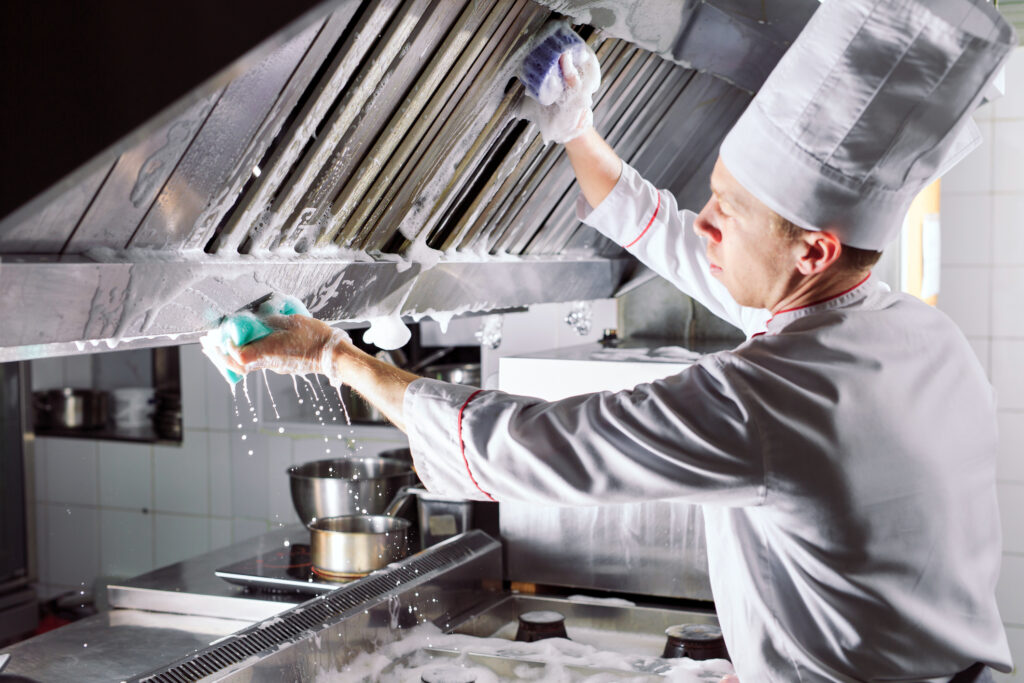
When most commercial kitchen owners think about hood and duct cleaning, they picture a technician arriving, spraying cleaning agents, and walking away. But real, code-compliant exhaust system cleaning involves far more than a quick wipe-down. Fire inspectors, insurance adjusters, and NFPA 96 standards require removal of grease down to bare metal—and that level of detail takes the right cleaning method.
At Flue Steam, we specialize in deep, compliant grease removal using a combined approach: traditional hand scraping plus high-temperature steam cleaning. Each method serves a different purpose, and only when used together can a kitchen exhaust system reach the level of safety necessary to prevent fires and protect your business.
Why Grease Removal Must Be More Than Surface-Level Cleaning
Inside your kitchen’s hoods, ducts, and exhaust system, grease vapor collects every time food hits the grill or fryer. Over time, that residue hardens and forms sticky, flammable buildup. While the surface nearest the hood may look visibly clean, deeper layers of grease often remain hidden along ductwork, fan housings, and hard-to-reach seams.
If a flare-up occurs, these grease layers act as fuel—allowing flames to spread beyond the hood and into your ventilation system. For this reason, fire code does not judge cleanliness by appearance; it requires complete grease removal down to bare metal. That standard is impossible to reach with a single-method cleaning.
What Hand Scraping Accomplishes That Steam Cleaning Alone Cannot
Steam cleaning is powerful, but steam alone will not cut through hardened grease in heavy-volume kitchens. This is where hand scraping becomes critical.
Hand scraping uses specialized tools to manually remove thick layers of grease before steam cleaning begins. Without this step, built-up grease remains trapped beneath the surface—even if the system looks clean from the outside.
Hand scraping is most effective for:
- High-heat cooklines with fryers and grills
- Restaurants or cafeterias operating 12 or more hours a day
- Systems that have not been serviced recently
- Grease-coated areas where steam cannot reach
Steam may soften grease, but scraping is what physically removes it. This is why NFPA 96 guidelines recognize manual scraping as a required component of certified hood and duct cleaning.
How Steam Cleaning Completes the Process
Once scraping removes the bulk of grease buildup, high-temperature steam cleaning finishes the job. Steam reaches deep into corners, seams, duct curves, and fan blades—areas that tools cannot access. It lifts fine grease particles, sanitizes metal surfaces, and leaves the system clean, safe, and odor-free.
Steam cleaning also supports:
- Better airflow and air balance
- Lower HVAC strain
- Reduced smoke and temperature hotspots in the kitchen
- Improved inspection results and documentation
Together, hand scraping and steam cleaning form a complete cleaning cycle—one that goes beyond surface appearance and protects your kitchen from inside the duct system outward.
Why This Matters for Fire Code, Insurance, and Inspections
During a fire or inspection event, documentation and compliance become just as important as the cleaning itself. If investigators find grease buildup inside ducts, even after a recent cleaning, insurance companies may deny claims. Health and fire inspectors can also issue citations or order kitchen shutdowns.
A combined scraping-plus-steam cleaning approach ensures:
- Compliance with NFPA 96 bare-metal standards
- Valid documentation for insurance and regulatory purposes
- Reduced risk of kitchen shutdown due to inspection issues
- Long-term exhaust system performance and lifespan
Flue Steam provides full service reports after every cleaning, giving operators the proof needed for fire code, landlord requirements, and insurance files.
How Often Should Kitchens Schedule Professional Cleaning?
Cleaning frequency depends on cooking volume. High-grease operations may require monthly service, while others may only need quarterly. A professional evaluation from Flue Steam helps determine the right schedule and ensures no portion of your system is overlooked.
Protect Your Kitchen With Proven Deep-Cleaning Methods
Surface-level cleaning may look good—but it will not protect you in an emergency. Only a combination of hand scraping and high-temperature steam cleaning delivers the true bare-metal clean required for safety.
To schedule a full system evaluation or cleaning with Flue Steam, call 800-700-FLUE. Your ventilation system is the frontline defense against commercial kitchen fires—make sure it is maintained with the level of care your business deserves.





Copyright © 2026 Flue Steam Inc. All Rights Reserved. | Service Locations
Website by 