Blog

How Decontamination Services Protect Your Commercial Kitchen Staff and Customers

June 11, 2026

Running a commercial kitchen means staying on top of countless safety responsibilities — from grease filter maintenance to fire suppression inspections. But one area that often gets overlooked is surface-level contamination. The same high-traffic environment that makes your kitchen productive also makes it a hotspot for the spread of harmful pathogens, bacteria, and viruses. That’s where professional decontamination services come in.

At Flue Steam, we’ve been protecting Southern California’s commercial kitchens for more than 50 years. In addition to our comprehensive exhaust system cleaning and fire prevention services, we also offer professional decontamination services designed to give your staff and customers the peace of mind they deserve.

What Professional Decontamination Actually Does

Routine cleaning keeps surfaces looking tidy, but it doesn’t always eliminate the pathogens that can put people at risk. Professional decontamination goes further by using EPA-registered products specifically formulated to disinfect, sanitize, and eliminate a broad spectrum of harmful microorganisms.

At Flue Steam, we use an EPA-registered product listed on the EPA’s List N, which classifies it as a disinfectant, virucidal, bactericidal, and tuberculocidal agent. It has demonstrated effectiveness against a wide range of pathogens, including COVID-19, MRSA, HEP-C, HIV, SARS, and PED Coronavirus. When a product earns an emergency viral pathogen claim from the EPA, it means the product has proven effective against viruses that are even harder to eliminate than SARS-CoV-2 — a meaningful distinction when the health of your team is on the line.

How the Process Works

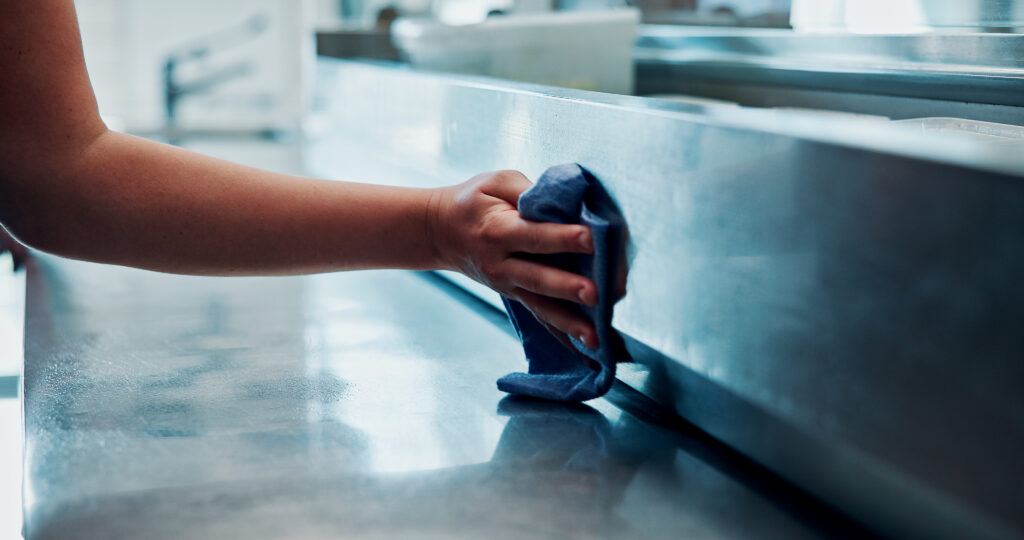
The Flue Steam decontamination process uses fogging, misting, and targeted wiping of high-touch surfaces throughout your facility. This includes areas like doorknobs, counters, keyboards, phones, ATMs, time clocks, credit card machines, and shopping carts — essentially anywhere hands make frequent contact.

One of the biggest advantages of our approach is that we use non-flammable products with extremely low corrosive potential compared to bleach and other common disinfectants. That means the treatment is safe to use around sensitive electronics and equipment. Better yet, your staff can re-enter the treated area just 30 minutes after application, keeping downtime to an absolute minimum.

Our technicians are fully trained in PPE best practices to protect both themselves and your facility during the process. They take special precautions to prevent cross-contamination, so you can feel confident in the results.

Who Can Benefit from Decontamination Services

While commercial kitchens are a natural fit for decontamination services, Flue Steam is equipped to treat a wide variety of commercial facilities. Restaurants, hotels, hospitals, supermarkets, factories, warehouses, country clubs, gyms, schools, and offices are all environments where our decontamination services can make a real difference.

If you manage any type of commercial space with regular foot traffic, periodic professional decontamination is a smart investment in the health and safety of everyone who walks through your doors.

A Partner You Can Trust

Choosing Flue Steam for decontamination services means working with a company that has been trained, certified, and authorized in the application of industry-leading chemicals for commercial facility decontamination. We bring the same commitment to thoroughness and professionalism to our decon services that we bring to every exhaust cleaning and fire prevention job we do.

Your employees and customers deserve to know that serious steps have been taken to keep them safe. Let Flue Steam help you deliver on that promise.

To learn more about our decontamination services or to request a free quote, contact Flue Steam at 800-700-FLUE today.

How Often Should a Commercial Kitchen Schedule Exhaust System Cleaning?

May 21, 2026

If you run a commercial kitchen, you already know that cleanliness is non-negotiable. But while most kitchen managers stay on top of daily surface cleaning and equipment sanitizing, exhaust system cleaning often gets pushed to the back burner—sometimes literally. The truth is, how often you clean your kitchen exhaust system can be the difference between smooth daily operations and a devastating grease fire. Flue Steam has been helping Southern California restaurants and commercial kitchens stay clean, safe, and compliant for over 40 years, and one of the most common questions we hear is: how often is often enough?

It Depends on How Much You Cook

There is no single answer that applies to every kitchen. Cleaning frequency should be based on how much cooking you do and what type of cooking it involves. The National Fire Protection Association (NFPA) sets the standard guidelines that most fire codes are built around, and they break it down like this:

Monthly: cleaning is recommended for high-volume operations such as 24-hour diners, kitchens that cook with solid fuels like wood or charcoal, or any operation that produces large amounts of grease-laden vapors

Quarterly: cleaning is typically appropriate for moderate-volume kitchens, including most full-service restaurants and catering operations.

Semi-annually: works for lower-volume kitchens such as those found in churches, day camps, or seasonal businesses.

Annually: may be sufficient for very low-use kitchens, such as those in certain office buildings or senior centers where cooking is minimal.

When in doubt, more frequent cleaning is always the safer choice. Grease accumulation does not wait for a convenient time to become a fire hazard.

Why Frequency Matters Beyond Compliance

Meeting code is important, but there are other compelling reasons to keep your exhaust system on a regular cleaning schedule. Grease buildup inside your ducts, hood, and exhaust fan does not just create a fire risk—it also reduces airflow efficiency, causes your system to work harder, and shortens the lifespan of your equipment. A well-maintained exhaust system keeps your kitchen cooler, your air cleaner, and your staff more comfortable during long shifts.

Regular cleaning also protects your bottom line. A grease fire that triggers your automatic suppression system or, worse, spreads beyond it, can mean thousands of dollars in damage, a temporary shutdown, and a serious blow to your reputation. Staying ahead of grease accumulation is far less expensive than dealing with the aftermath.

Hand Scraping vs. Steam Cleaning: Matching the Method to the Schedule

For kitchens that require monthly service, hand scraping is a practical and cost-effective option. It removes surface grease from accessible areas and keeps buildup from reaching dangerous levels between more thorough cleanings. Steam cleaning, which uses high-pressure hot water to penetrate deeper into the system, is more comprehensive and is typically done two to four times per year alongside regular hand scraping.

Flue Steam recommends a combination approach for most commercial kitchens: monthly hand scraping with periodic steam cleaning to address what routine service cannot reach.

Stay on Schedule with Flue Steam

Keeping up with exhaust system cleaning is easier when you have a reliable partner handling the scheduling for you. Flue Steam works with each client to set a cleaning frequency that matches their operation, keeps them compliant with NFPA and local fire codes, and provides a Certificate of Performance sticker after every visit as documentation for code inspectors and insurance purposes.

Ready to get on a schedule that protects your kitchen and your business? Contact Flue Steam today at 800-700-FLUE to get started.

What Is a Certificate of Performance—and Why Your Commercial Kitchen Needs One

May 8, 2026

Running a commercial kitchen means managing a long list of responsibilities every single day. Between food safety, staffing, equipment upkeep, and customer satisfaction, it can be easy to lose track of the compliance side of things. But when a fire code inspector walks through your door, you want to be ready. One of the most important pieces of documentation you can have on hand is a Certificate of Performance—and if you are not sure what that is or whether you have one, this is worth your attention. Flue Steam has been providing kitchen exhaust cleaning and fire prevention services throughout Southern California for over 40 years, and we issue a Certificate of Performance after every single cleaning visit.

What a Certificate of Performance Actually Is

A Certificate of Performance is a sticker or document issued by your kitchen exhaust cleaning company after completing a compliant cleaning service. It serves as official proof that your exhaust system has been cleaned in accordance with NFPA 96, the National Fire Protection Association standard that governs ventilation control and fire protection in commercial cooking operations.

The certificate typically includes details such as the date of service, the areas of the system that were cleaned, the name of the service provider, and confirmation that the work meets code requirements. It is usually displayed somewhere visible in your kitchen—often near the hood—so that inspectors can easily locate it.

Why It Matters to Inspectors and Insurers

Fire code inspectors are trained to look for this documentation when they visit your facility. If you cannot produce proof of recent, code-compliant exhaust cleaning, you may be looking at fines, failed inspections, or even a required shutdown until the issue is resolved. The certificate takes the guesswork out of compliance by providing a clear, dated record that the work was done and done correctly.

What many kitchen operators do not realize is that a Certificate of Performance can also have a direct impact on your insurance. Some insurers offer reduced premiums to businesses that maintain documented, regular exhaust system cleaning. In the event of a fire, your certificate also serves as evidence that you took reasonable steps to prevent it—which can matter significantly during a claim.

Not All Cleaning Services Provide One

Here is something important to understand: not every company that offers exhaust cleaning will provide a proper Certificate of Performance. Some services may clean only the most visible parts of your system—typically the range hood—while leaving ducts, drip cups, and exhaust fans untouched. A certificate issued after incomplete cleaning does not accurately represent the condition of your system and could leave you exposed during an inspection or insurance review.

At Flue Steam, our licensed technicians clean the entire exhaust system, not just the parts that are easiest to reach. We work through the hood, the exhaust ducts, drip cups, and exhaust fans, and we can install code-required access panels in your ducts when needed to ensure a truly thorough cleaning. Only after completing a full, compliant service do we issue your Certificate of Performance sticker.

Make Sure Your Kitchen Is Covered

If you are not sure when your last documented cleaning took place, or if you have been relying on a service that does not provide proper certification, now is the time to make a change. Staying compliant protects your business, your employees, your customers, and your investment.

Contact Flue Steam at 800-700-FLUE to schedule your next kitchen exhaust cleaning and make sure you always have the documentation to prove your kitchen is safe and up to code.

Why Your Commercial Kitchen’s Swamp Cooler Is More Important Than You Think

April 21, 2026

When restaurant owners and kitchen managers think about fire prevention and ventilation, they tend to focus on the obvious: the exhaust hood, the ducts, the grease filters. And while all of those are critical, there’s one component of your kitchen ventilation system that doesn’t get nearly enough attention — the swamp cooler.

At Flue Steam, we’ve been servicing commercial kitchens across Southern California for more than 40 years. In that time, we’ve seen firsthand how a neglected swamp cooler can quietly undermine the performance of an otherwise well-maintained kitchen. Here’s what every commercial kitchen operator should know.

What Does a Swamp Cooler Actually Do?

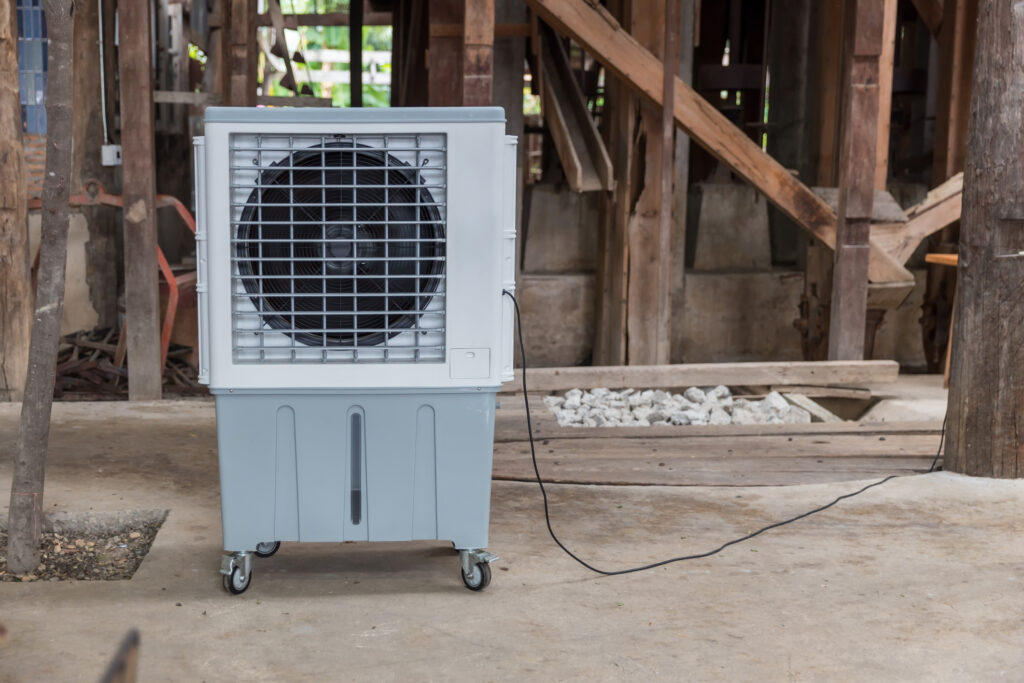
Your kitchen exhaust system works by pulling hot, greasy air out of the kitchen and venting it outside. But for that process to work properly, the air that leaves has to be replaced by air coming in. That’s the job of the swamp cooler, also known as a makeup air unit.

When the volume of incoming cool air doesn’t match the volume of hot air being expelled, your kitchen develops a negative pressure environment — essentially a vacuum effect. This imbalance leads to a chain of problems that affect everything from employee comfort to fire safety.

What Happens When Makeup Air Is Inadequate?

A kitchen operating with insufficient makeup air will experience several noticeable — and not so noticeable — problems:

  • Rising temperatures. Without a steady supply of cool replacement air, heat builds up quickly. This creates an uncomfortable and potentially dangerous environment for kitchen staff.
  • Reduced exhaust efficiency. When the exhaust system can’t draw air properly, grease-laden vapors linger longer in the kitchen and build up faster in ducts, increasing fire risk.
  • Slamming doors. The vacuum effect can cause exterior doors to slam shut on their own — a minor nuisance that’s actually a symptom of a larger ventilation issue.
  • Smoky conditions. Poor airflow can lead to smoke and cooking fumes staying in the kitchen rather than being safely expelled through the exhaust system.

None of these outcomes are acceptable in a professional kitchen, and all of them can be avoided with proper swamp cooler maintenance.

How Often Should Your Swamp Cooler Be Serviced?

Industry standards recommend having your swamp cooler professionally serviced at least every six months. During a service visit from Flue Steam, a licensed technician will inspect all of the unit’s vital components, including the float valve, pump, belts, and pads. You’ll be notified of any parts that need replacement, and the unit will be drained, cleaned, and resealed.

For maximum convenience, we recommend scheduling your swamp cooler service at the same time as your kitchen exhaust system cleaning. This way, you’re addressing both sides of your ventilation equation — how greasy air leaves and how clean air enters — in a single, efficient visit.

Sales and Installation, Too

If your kitchen doesn’t currently have a swamp cooler, or if your existing unit is beyond repair, Flue Steam also offers swamp cooler sales and installation. Our team can help you select the right unit for your kitchen’s size and cooking volume, ensuring your ventilation system is balanced from day one.

Don’t Overlook Half of Your Ventilation System

A well-functioning kitchen exhaust system is only as effective as the makeup air system supporting it. If your swamp cooler isn’t keeping up, your entire ventilation setup is working at a disadvantage — and so is your kitchen staff.

Let Flue Steam help you keep both sides of your kitchen ventilation system in top shape. Give us a call at 800-700-FLUE to schedule your next service visit or to learn more about our complete kitchen air control services.

Automatic Fire Suppression Systems vs. Portable Fire Extinguishers: What Every Commercial Kitchen Needs to Know

April 9, 2026

When it comes to fire safety in a commercial kitchen, no single device does it all. The best-protected kitchens use a layered approach — one that combines automatic systems designed to respond instantly with portable equipment that puts control in human hands. At Flue Steam, we sell, install, and service both, and we want every kitchen operator in Southern California to understand how each one works and why both are essential.

How Automatic Fire Suppression Systems Work

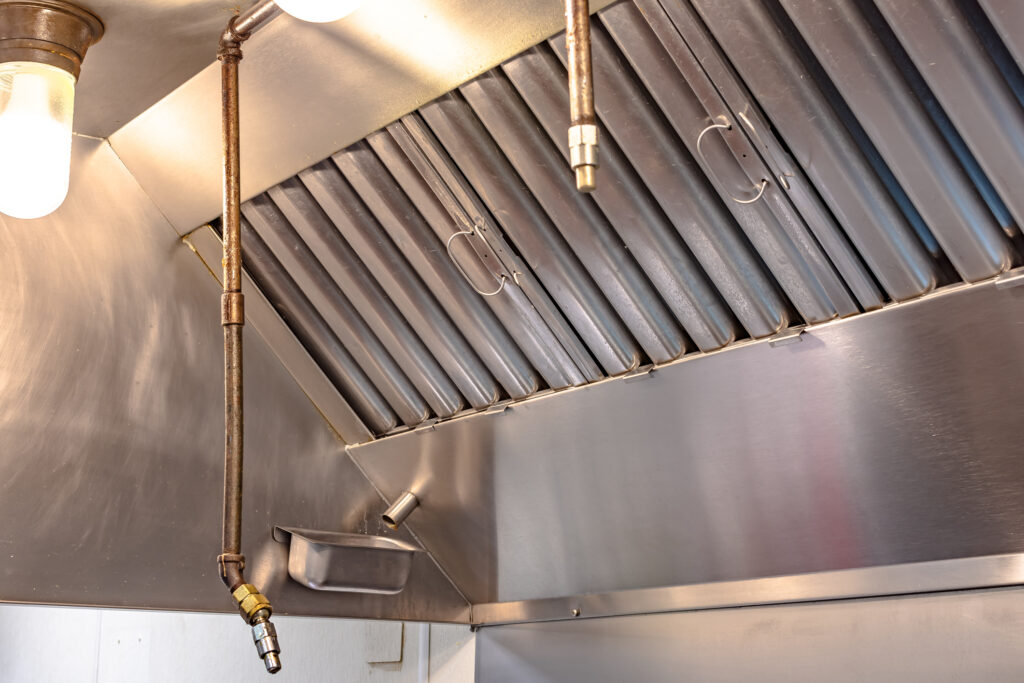
An automatic fire suppression system is your kitchen’s first line of defense when a fire breaks out — even if no one is nearby to respond. A temperature sensor inside the exhaust hood continuously monitors air temperature. When it detects heat reaching a preset threshold, typically around 450 degrees, the system activates automatically.

Once triggered, the system releases an extinguishing agent that douses flames on your cooking appliances and inside the plenum. Simultaneously, an automatic shut-off valve cuts off the gas supply to your equipment, removing one of the key ingredients a fire needs to grow. Most systems also include a manual pull trigger, giving staff the option to activate the system themselves if they spot a fire before the sensor does.

The automatic nature of these systems is what makes them so valuable. Fires in commercial kitchens can escalate in seconds, and waiting for a human response — even a quick one — can mean the difference between a contained incident and a devastating loss.

Automatic Suppression Systems Are Required by Law

This isn’t optional equipment. The use of automatic fire suppression systems is mandated by code for commercial kitchens. Beyond installation, the law also requires that these systems be inspected and serviced by a licensed technician every six months to remain in compliance.

At Flue Steam, our licensed technicians provide the inspections and maintenance your system needs to meet all relevant codes, including the UL 300 standard. After each visit, you’ll have the documentation you need to demonstrate compliance to inspectors and insurers alike.

Where Portable Fire Extinguishers Fit In

While your automatic suppression system handles fires that ignite when no one is watching, portable fire extinguishers are your backup when staff are present and need to act fast. They also cover areas of your facility that fall outside the range of your suppression system — dining areas, storage rooms, entryways, and more.

Not all extinguishers are the same, and choosing the wrong type for your environment can make them less effective or even dangerous. Flue Steam sells all types of portable fire extinguishers and can help you determine which classes are appropriate for your kitchen, how many units you need, and where to position them in accordance with fire safety codes.

Maintenance Matters More Than Most Operators Realize

A fire extinguisher that hasn’t been properly maintained may fail at the worst possible moment. That’s why licensing requirements exist for extinguisher service — and why it pays to work with a team that knows what they’re doing. Our technicians will service your portable extinguishers and ensure they’re fully charged and ready to perform when it counts.

Two Systems, One Goal

Automatic fire suppression systems and portable fire extinguishers aren’t redundant — they’re complementary. One responds when no one can. The other empowers the people who are there. Together, they create a level of fire protection that neither provides alone.

Flue Steam can help you build and maintain both layers of your kitchen’s fire safety plan. Call us today at 800-700-FLUE to schedule service or to get started with new equipment — because the best time to prepare for a fire is long before one starts.